Why do businesses exist?
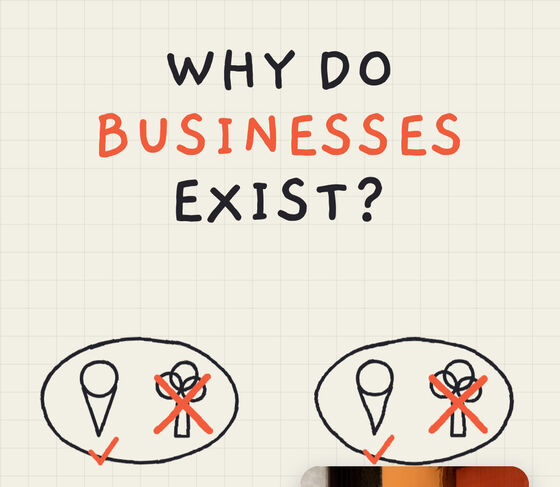
A human from one lakh years ago would pick ice cream over broccoli. So would you.
One lakh years apart. Same bubble.
Change the year or the desire. The two bubbles never come apart.
Our desires have not changed. Food, sex, health, security. The caveman wanted them. You want them.
Businesses exist to fulfil them. That's the second idea in The Book of Clarity by Paras Chopra, who co-founded Wingify, and I'm reading it one idea at a time.
The desire stays. Only the way we meet it changes.
The real Maslow's pyramid
You've seen Maslow's pyramid: food and sleep at the bottom, then safety, love, esteem, and becoming who you want to be at the top. He redraws it with time running left to right. The tiers stay where they are. What moves is how each one gets met: better, faster, cheaper.
Sort these products. Tap the tier each one serves.
every tier → better, faster, cheaper →
Where does it go?
Products are my examples. The tier names follow the book's drawing.
Even YouTube live is an old desire
Think about live streaming. What's the oldest desire it satisfies? Status. He writes that people go live to entertain, or to look desirable, and the real aim is status and prestige.
New screen. Same caveman, wanting the tribe to look at him.
What will not change in ten years?
Jeff Bezos says people ask him all the time what will change in the next ten years. Almost nobody asks what will not.
- Low prices
- Fast delivery
For Amazon the answer was easy. Nobody will ever want higher prices or slower delivery. So build on what stays the same.
Happy is never enough
"I'm happy!"
Customers are always dissatisfied, even when they say they are happy. In his 2016 letter to shareholders, Bezos calls them "beautifully, wonderfully dissatisfied".
That's why startups beat old companies. People keep looking for a better way to get the same old thing.
What fuels capitalism isn't the shiny new thing. It's the old thing, made better.
Which desire does your idea serve?
The book ends this part with one question for founders. Run your own idea through it.
"Can you add this feature?" No, no, no.
Next: why you should never believe what customers say.
One idea a day, on camera
 ▶ Watch the Short
We met Paras at Lossfunk, where he spends his time now. I'm opening his book one idea at a time, one short video each, and writing up what I learn.
I build Ayu, a health records app for Indian families. The desire under it is older than any app: knowing your family is okay. We're just trying to meet it a little better.
- 8 OctWhy do most startups fail?
- 9 OctWhen should you start a startup?
- 10 OctWhy do businesses exist?
Watch it as a reel on Instagram. Follow along on Instagram, @om_cosmos
Do this today
Write one line: "My idea serves ____, and it's better, faster or cheaper than ____." If you can't fill both blanks, that's your homework, not the code.